 New
Shipping containers
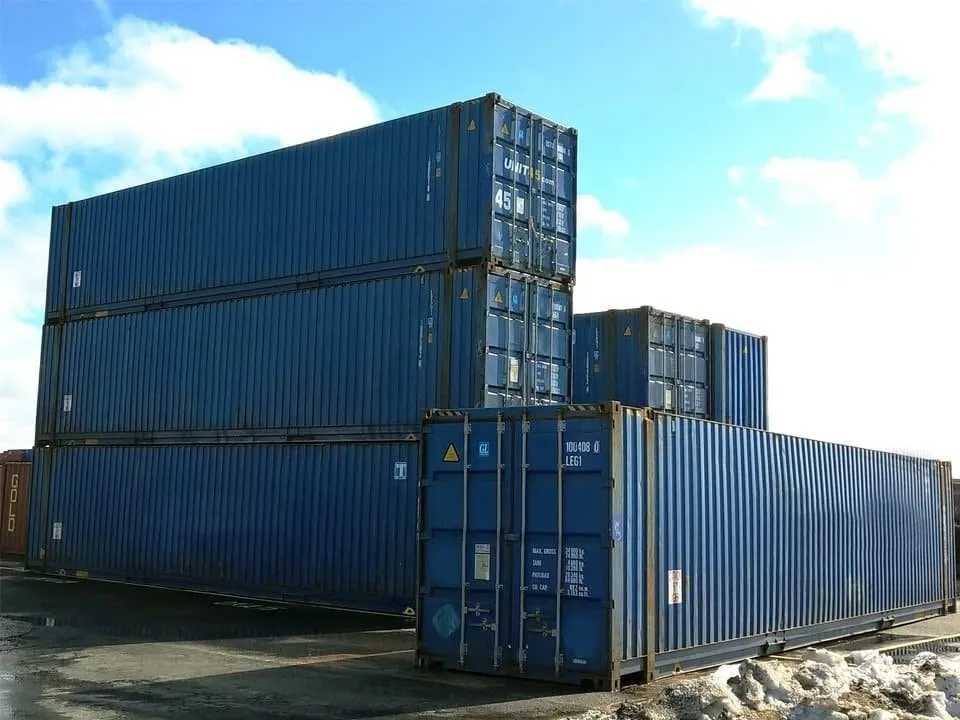
45′ HCPW Shipping Container Blue (RAL 5013)
REFERENCE PRICE · AUD$4,483
- Technical details
- Ask for product specifications
- Condition
- New
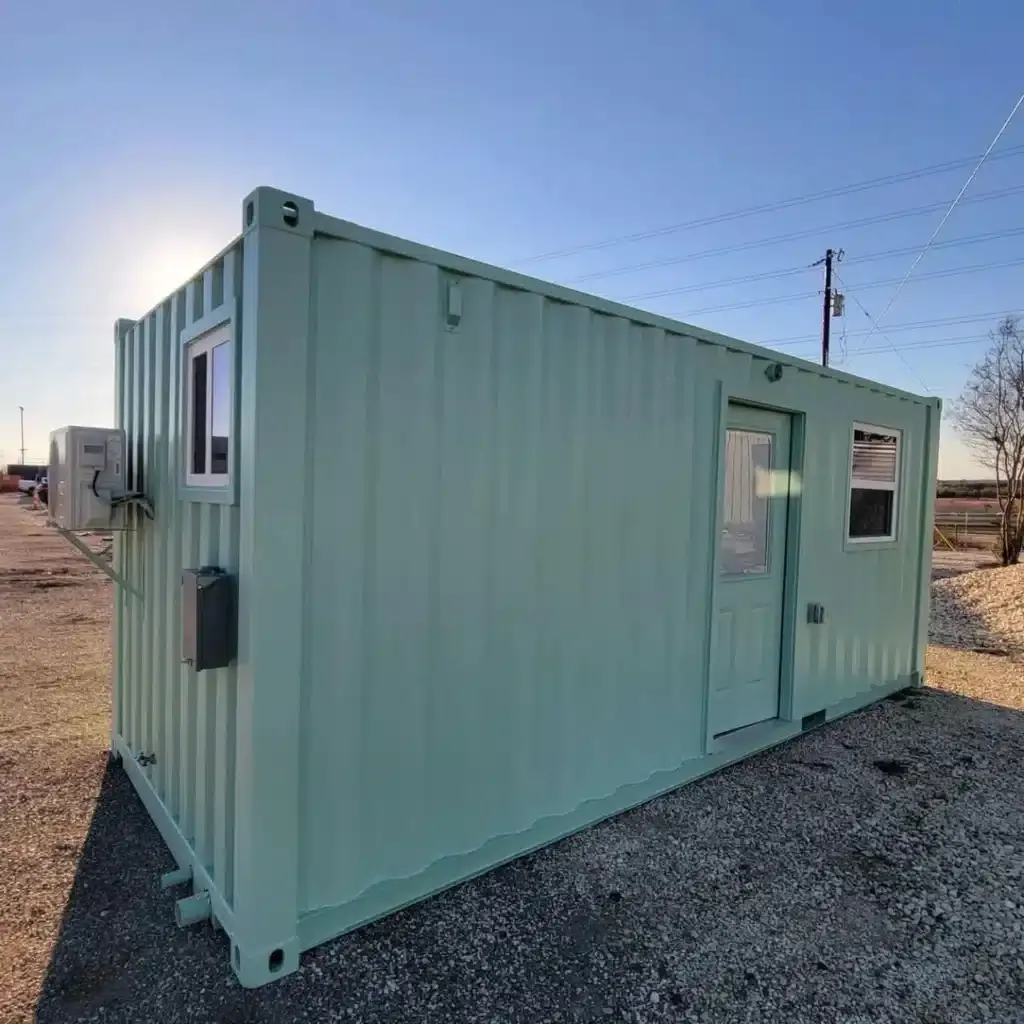
Now building container homes, granny flats and studios. Request your quote
Container homes, expandable units, flat-pack kits and portable offices delivered into Portland and the surrounding Cumberland County towns from our yard in Turner.
Our yard at 2002 Auburn Rd in Turner sits roughly 45 miles north of Portland, which puts most of Cumberland County inside a comfortable same-day run for a tilt-bed truck. Routing usually follows Route 4 to the Maine Turnpike, so the practical limits are at your end of the trip rather than ours: the turn into the property, the width of the gate and whether the truck can back straight to the placement point. Send the delivery address early and the route can be checked before the appointment is booked.
Portland has a lot of older, narrow lots where a 40ft unit simply will not turn. A tilt-bed needs roughly 100 feet of straight clearance behind the container to slide it off, plus room for the truck itself. Where that is not available, the options are a shorter unit, a crane placement or a different spot on the property. Measure the approach and photograph it before ordering — it is the single most common reason a delivery has to be rescheduled.
Coastal and low-lying ground around Portland holds water, and a container set on soft ground will settle unevenly and rack the door frame until the doors stop closing square. Crushed stone pads or pressure-treated timbers under the corner castings handle this well. Level the unit across both diagonals, not just end to end, and check it again after the first winter.
Portland treats a sealed storage container on private property differently from a container someone intends to occupy. Storage is usually a zoning and placement question; anything occupied is a building-permit question handled by Portland Permitting & Inspections. Historic-district and shoreland overlays add their own review. Check before you order — the answer changes what you should buy.
Portland allows accessory dwelling units, and a modular or expandable home is a common way to add one. The constraints are the familiar ones: setbacks, lot coverage, the service connections and whether a crane can reach the back of the property. Decide early whether the unit is a dwelling or ancillary space, because that single answer sets the approval pathway and the foundation design.
The delivery address, the intended use, the size you are considering, a photo of the approach and the placement spot, the services already at the site and whether anything is available on site to help unload. If the unit will be occupied, say so — those details are what turn a catalogue price into a real delivered figure.
Stocked units normally enter handling within the standard window after the order is confirmed and funds clear, and Portland is close enough that transit is short once the unit is booked. The delivery appointment is confirmed before dispatch rather than promised at order time.
Often, but it depends on the approach. A tilt-bed needs a straight, firm run and roughly 100 feet of clearance. Send photographs of the driveway, the gate and any overhead wires and the placement can be assessed before booking.
For a sealed storage container on private property it is usually a zoning and placement question rather than a building permit. Anything that will be occupied needs a building permit. Confirm with Portland Permitting & Inspections for your specific lot.
Island placements involve barge or ferry freight arranged separately and are quoted case by case. Tell us the island and the intended landing point and the options can be priced.
Send the delivery address, the placement point and a photo of the approach.
Contact NorthernNew Used
 New
 Used